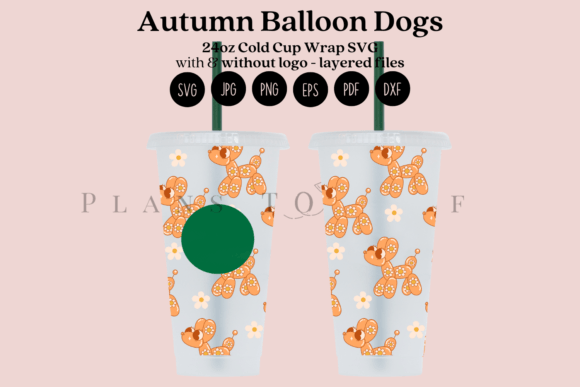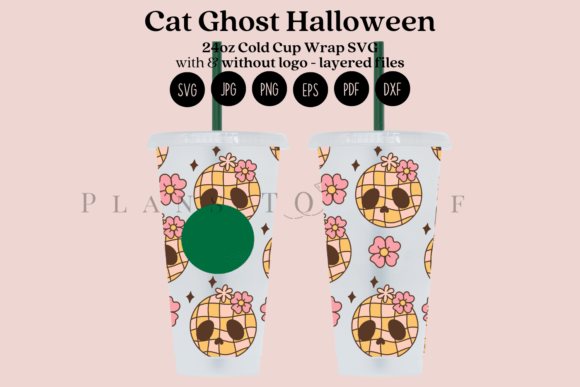
Disco Ball Skull Halloween 24oz Cold Cup
A Designer’s First Glance: Bold, Playful, and Unapologetically Thematic
When I opened the Disco Ball Skull Halloween 24oz Cold Cup files, what struck me first wasn’t just the glittery skull—it was the rhythm of the design. The mirrored facets radiate outward like light catching a rotating disco ball, but grounded with clean, confident line work that reads instantly as “Halloween” without leaning into cliché. It’s not cartoonish or overly sweet; it’s got edge, wit, and just enough visual punch to hold up on fabric—not just tumblers. As an embroidery designer who’s stitched hundreds of holiday motifs, I immediately pictured this translated onto a black cotton tote bag for a boutique pop-up: bold enough for shelf appeal, detailed enough to reward a second look, and cohesive enough to feel intentional—not just slapped on.
How It Translates Off-Screen and Onto Fabric
This isn’t a tumbler wrap pretending to be embroidery-ready—it’s a graphics asset that *can* become embroidery, but only with thoughtful adaptation. I tested the vector layers (SVG, EPS, PDF) in my digitizing software and confirmed the outlines are crisp, scalable, and free of unintended anchor points—critical when converting to stitch paths. The symmetry and radial repetition mean satin-stitched facets could translate beautifully into dense fill-stitch clusters, especially on medium-weight fabrics like canvas or fleece-lined sweatshirts. On a baby onesie? I’d simplify one or two outer facets to avoid overcrowding tiny chest space. On an apron pocket? Perfect scale—no resizing needed.
That said, the original layout presumes a smooth, cylindrical surface. Embroidery adds dimension and texture. So while the Disco Ball Skull Halloween 24oz Cold Cup works cleanly on flat mockups, its real-life charm depends on where—and how—you place it. A centered chest placement on a crewneck sweatshirt gives breathing room for the reflective geometry. A cap front? Risky—curved surfaces compress detail, and the fine lines around the skull’s eye sockets may blur unless you reduce stitch density or add underlay.
Where It Shines (and Where to Pause)
The Disco Ball Skull Halloween 24oz Cold Cup excels in projects where personality meets practicality: embroidered patches for festival gear, pillow covers for a teen’s bedroom, tea towels for a Halloween bake sale, or personalized gift sets (think: matching cup + embroidered cotton drawstring bag). Its layered file structure lets you isolate the skull, the disco facets, or the halo effect—ideal for building custom applique designs or combining with other Halloween elements like bats or cobwebs.
Use caution on thin or highly textured fabrics. That delicate facet line work won’t hold up on loosely woven linen or stretchy jersey without extra stabilizer and possibly a running-stitch outline for definition. On dark fabric, contrast is your friend—test thread colors in grayscale mockups first. And if you’re planning frequent washing (baby items, kitchen towels), avoid ultra-dense fill areas unless you’ve verified stitch density won’t pucker or wear prematurely.
Real-World Fit: From Craft Fair Booth to Etsy Listing
Last month, I used a modified version of the Disco Ball Skull Halloween 24oz Cold Cup for a limited-run embroidered apron series sold at a local makers market. We kept the skull central, reduced the outer ring by 20%, and added a subtle black-on-black satin stitch border for depth. Customers responded immediately—not just to the theme, but to how *crafted* it felt. That’s the quiet power of this design: it doesn’t scream “clip art.” It invites engagement. For Etsy sellers, that translates directly to better photo mockups, stronger listing thumbnails, and higher perceived value—even before stitching begins.
It also performs well as a digital product preview. Because the files include layered raster (PNG, JPG) and vector formats at 300DPI, you can generate sharp printable mockups for social posts or client pitches. Just remember: what looks crisp on screen may need simplification for stitch execution—especially tiny highlights or tightly spaced facets.
Practical Notes Every Embroidery Designer Should Check
- Test on scrap fabric first—especially with your intended stabilizer and thread combo. Faceted edges behave differently on cotton versus polyester.
- Review stitch density before finalizing. High-density fills may overwhelm lightweight fabrics or cause stiffness on wearable items.
- Confirm hoop size compatibility. The original tumbler wrap dimensions don’t map directly to standard embroidery hoops—scale thoughtfully.
- Inspect small details like inner facet lines. They may need slight thickening or conversion to satin stitch for clarity.
- Try black-and-white mockups to assess contrast and legibility on both light and dark backgrounds.
- Use proper stabilizer—cutaway for knits, tear-away for stable wovens—to support those geometric edges.
- Verify licensing before selling finished embroidered goods or reselling the digital file. This is a graphics asset—not automatically cleared for commercial embroidery redistribution.
Final Thought: A Design That Earns Its Place
The Disco Ball Skull Halloween 24oz Cold Cup isn’t just another Halloween download. It’s a mood, a moment, and a versatile foundation—if you treat it like one. It rewards intention: choosing the right fabric, adjusting density, honoring scale, and respecting how thread interacts with light and texture. Used well, it elevates a simple tote bag into a conversation starter, turns a plain sweatshirt into wearable art, and gives your craft business a signature edge. But it won’t carry itself. Like any strong design asset, it asks for your judgment—and repays it in handmade authenticity.