Groovy in My Big Sister Era SVG
First Impressions: A Warm, Playful Vibe That Feels Like a Hug
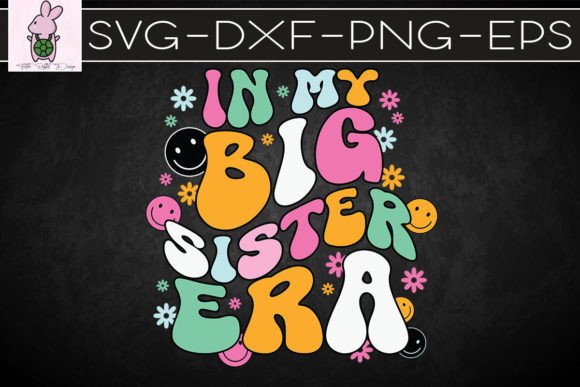
Opening Groovy in My Big Sister Era SVG for the first time, I immediately felt its personality—friendly, nostalgic, and intentionally unpolished in the best way. It’s not sleek or minimalist; it’s got rhythm, rounded letterforms, and that soft, hand-drawn energy you’d expect from a heartfelt sibling tribute. The layout feels balanced but relaxed—no tight kerning, no aggressive angles. It reads clearly at a glance, which is essential when you’re stitching it onto a baby onesie or embroidering it on a linen tea towel for a new aunt’s baby shower gift.
Real-Life Test Run: Stitching It Onto a Linen Tote Bag
Last week, I used Groovy in My Big Sister Era SVG to create a custom embroidered tote for a local boutique launching a “Big Sibling” gift line. I chose natural linen—medium weight, slightly textured—and paired it with a medium-density cutaway stabilizer. The design scaled beautifully to 4.2 inches wide, fitting snugly in my 5×7 hoop without crowding. The curves held up well during stitching—no skipped satin stitches, no thread breaks. What stood out most was how the phrase *landed* emotionally: customers paused, smiled, and said things like, “That’s exactly how my daughter talks about her little brother.” That kind of resonance matters more than perfect symmetry—it makes the finished product feel personal, not mass-produced.
Where This Design Shines (and Where It Needs Thought)
Groovy in My Big Sister Era SVG works exceptionally well for:
- Personalized gifts—especially baby items, nursery decor, and sibling-themed holiday embroidery like Easter baskets or birthday pillow covers;
- Small shop merchandise—think sweatshirt embroidery for boutique staff or embroidered patches sewn onto denim jackets for craft fairs;
- Custom apparel where warmth and approachability matter more than high-contrast precision (e.g., light-colored cotton tees, organic canvas totes, cotton-blend aprons);
- Digital embroidery file previews—the clean PNG version with transparent background renders flawlessly in printable mockups, helping Etsy sellers show realistic product visuals without over-editing.
But here’s where attention is needed:
- Stretchy or thin fabrics: On lightweight jersey or ribbed knit, the letterforms can blur unless stabilized aggressively—test with tear-away + topping on t-shirts before committing to a full batch.
- Dark fabric backgrounds: The design relies on shape and spacing more than fine detail, so avoid ultra-thin thread or low-contrast colors. Stick with bold, matte thread—navy on charcoal, kelly green on black—to keep it legible after washing.
- Curved surfaces: While it stitched cleanly on my flat tote, I’d hesitate to use it full-size on a structured cap front without simplifying the inner curves—some corners may pucker if hooped too tightly.
- Frequent-wash items: Because it leans into softer edges and moderate stitch density, avoid placing it on kitchen towels or bibs that go through heavy laundering cycles unless you reinforce with a light underlay and secure thread trims.
Design Integrity Meets Commercial Practicality
As a designer who reviews hundreds of machine embroidery designs each year, I pay close attention to how a file supports—not hinders—the handmade product experience. Groovy in My Big Sister Era SVG does this quietly but effectively. Its proportions are generous enough for confident stitching, yet restrained enough to avoid overwhelming small garments. It doesn’t scream “look at me”—it invites connection. That subtle shift makes all the difference for Etsy sellers: buyers don’t just buy text, they buy meaning. And when that meaning lands, trust builds. Repeat customers return not just for quality stitching, but because your work feels seen.
For craft business owners, this design also plays well across branding touchpoints. Use the SVG in your shop banner, the PNG in social media posts, and the DXF version if you’re layering it into a larger applique design for custom patches. It holds up visually whether you’re printing it on a label or stitching it onto a cotton drawstring bag—it’s versatile without being generic.
Practical Embroidery Designer Notes You’ll Actually Use
Before stitching Groovy in My Big Sister Era SVG into your next project, do these five things:
- Test on scrap fabric—especially if using textured weaves, knits, or blends. Watch how the curves translate and whether letter spacing stays open.
- Check thread color contrast in both daylight and indoor lighting. What reads well on screen may vanish on oatmeal linen or heather gray.
- Review stitch density in your embroidery software. If it looks overly dense in fill areas, reduce density by 5–8%—this helps prevent fabric distortion and improves drape on apparel.
- Confirm hoop size compatibility. Though labeled “cup-sized,” verify your intended scale fits comfortably within your machine’s standard hoop dimensions—don’t assume.
- Inspect small details at 200% zoom in your editing software. Look for stray anchor points, overlapping paths, or unintended overlaps that could cause stitching errors.
And one final note: Groovy in My Big Sister Era SVG is listed as part of a digital design kit—but since licensing terms aren’t specified in the product description, always confirm commercial use rights before selling finished embroidered products or bundling it into your own digital embroidery file packs. When in doubt, reach out to the creator directly. Clarity there protects your craft business and honors the work behind the Graphics category.
A Design That Fits Its Name—Without Trying Too Hard
“Groovy” isn’t just a throwback word here—it’s a signal of ease, authenticity, and joyful intention. Groovy in My Big Sister Era SVG doesn’t demand perfection. It asks for thoughtful placement, honest fabric choices, and space to breathe. Whether you’re stitching it onto a baby blanket for a client, prepping a batch of personalized sweatshirts for your Etsy shop, or designing a boutique’s seasonal gift collection, this embroidery file earns its place—not because it’s flashy, but because it feels true. And in handmade work, that’s the highest compliment of all.